

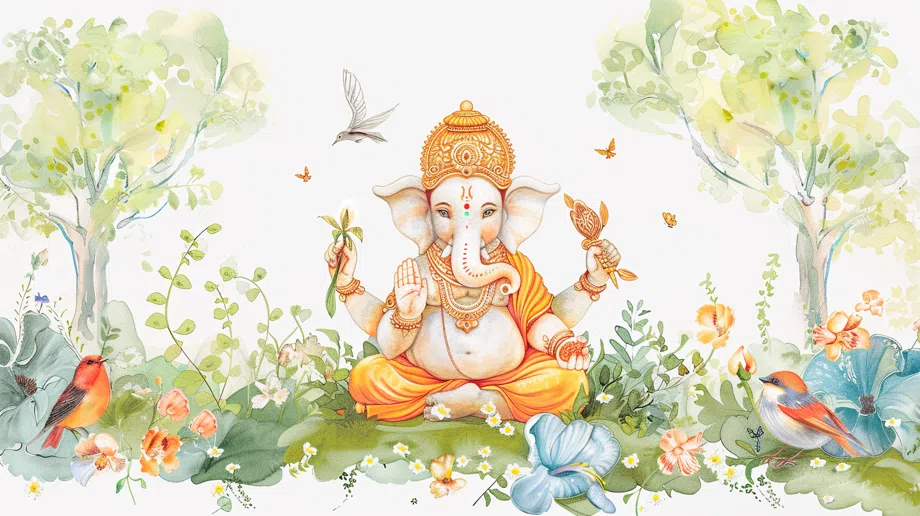


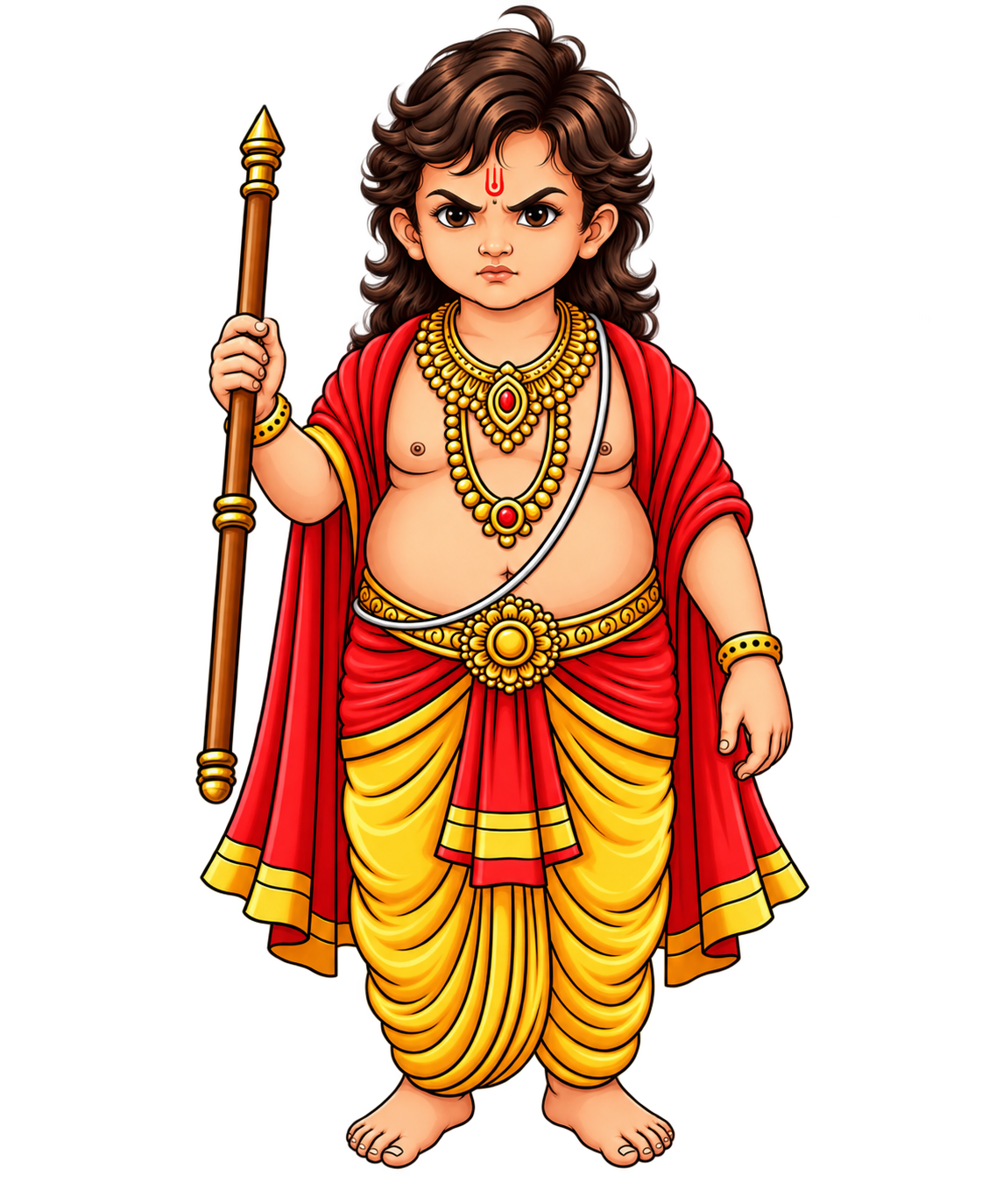
Happy Ganesh Chaturthi
गणपति बप्पा मोरया 🙏
May Ganesh remove ignorance and pride from our hearts and guide us toward truth, dharma, compassion, and pure consciousness
The Spiritual and Philosophical Mystery Behind Ganesha’s Head Being Severed
What Is the Mystery Behind Ganesha’s Head Being Severed?
It is said that everyone worships Ganesha as the deity who removes obstacles—as Vighnaharta, the remover of obstacles. Yet, we commonly hear the story of Ganesha’s head being severed.
It is said that Goddess Parvati created Ganesha from the turmeric paste from her body while she was cleansing herself and gave him life. She then instructed him to stand guard at the entrance and not allow anyone to enter without her permission.
At that moment, Lord Shiva arrived. Ganesha did not recognize Shiva as his father and, following Parvati’s command, stopped him from entering. This led to a confrontation between Shiva and Ganesha, which eventually turned into a battle.
In a moment of anger, Shiva finally severed Ganesha’s head.
Seeing this, Goddess Parvati became extremely furious. Overcome with grief at the death of her son, she assumed her fierce form. In order to calm her, Shiva brought the head of an elephant, placed it on Ganesha’s body, and restored him to life.
After this, Shiva granted Ganesha the blessing that he should be worshipped before every auspicious undertaking and that he would be revered as Vighnaharta—the remover of obstacles.
The Question Behind the Story
But here a question arises:
The story, as it is usually told, only explains that Ganesha could not recognize his father and that he faithfully carried out the duty entrusted to him. So, what is the deeper spiritual and philosophical secret hidden behind this event?
Why should Ganesha be worshipped as ‘Vighnaharta’, the remover of obstacles?
We should not merely listen to this story as an event and remember it; we should also try to understand the deeper meaning behind it.
What does this story actually say about Ganesha’s intellect or wisdom?
Where, in this particular incident, is it directly stated that obstacles will be removed?
And yet, we worship Ganesha seeking intellect, wisdom, and the removal of obstacles from our lives.
So, we should pause and reflect—
What is the spiritual message hidden behind Ganesha’s head being severed and an elephant’s head being placed upon his body?
Many stories present us with a particular meaning. However, it is natural for every person who reads or hears a story to interpret it differently, based on their own experiences, way of thinking, and level of understanding.
But we should not stop there.
We should also ask:
“Why did they tell this story in this particular way? What was the original intention behind presenting it like this?”
When a particular answer or practice is passed from one person to another and continues across generations, it gradually becomes a ritual or tradition. Eventually, we continue following that tradition, but we may forget the original purpose behind it.
Tradition and Its Deeper Meaning
In fact, there is nothing wrong with following a tradition.
But a tradition should not become a meaningless practice.
When we forget the knowledge, intention, and deeper meaning behind a tradition, and it remains merely as a ritual or procedure, we should pause for a moment and ask ourselves:
“Why am I doing this?”
“What is the true meaning behind it?”
That is why, even when worshipping Ganesha, we should not simply pray on one particular day saying, “I want to have good education and intelligence.”
Instead, we should ask:
“What are they truly trying to tell us through this story?”
“What is the spiritual and philosophical message contained within this story?”
Understanding the intention behind a tradition is more important than merely following the tradition. That is true wisdom.
Questions We Need to Ask
Think about it—
Shouldn’t we try to understand how we are supposed to live, what the scripture actually contains, and what is the significance of the message it conveys?
Why did the author write the story in exactly this way?
Is there a deeper meaning behind describing each event in this particular manner?
If we try to understand the philosophical message behind this story instead of treating it merely as a mythological event, many questions naturally arise before us.
1. How Did Goddess Parvati Create Ganesha?
How did Goddess Parvati create Ganesha?
To understand this, we must first find the answer to the question: Who is Goddess Parvati?
Parvati represents Shakti—the Divine Power or Energy.
Every physical form and every manifestation that appears in this creation takes place through Shakti. Therefore, Goddess Parvati can be understood as a symbol of the power through which creation manifests itself.
But here another important question arises—
How did life come into that form?
Creating a form is one thing.
Did Goddess Parvati merely create a physical form?
Or did consciousness also manifest within that form?
What gives life to a form?
What transforms a body into a living being?
Is it only Shakti?
Or is there another principle that gives consciousness and vitality to that Shakti?
As we begin to understand the answer to this question, the deeper philosophical meaning hidden within Ganesha’s story gradually begins to unfold.
Every living being possesses energy. For life to manifest on Earth, every living being has not only a physical body but also its own nature, abilities, intellect, and tendencies.
Every living being possesses intelligence in its own way. Each has qualities appropriate to its nature. Human beings, too, observe their surroundings and adjust their behavior according to their circumstances.
In the same way, every human being has a different nature, way of thinking, ability, and set of tendencies.
2. Is Human Nature Completely Pure at Birth?
But when a person is born, are they completely pure and untouched?
As long as there is a body, there is action and karma. Where karma exists, there can also be ego, tendencies, behavioral patterns, and the influence of past impressions.
Therefore, Shakti exists within all living beings. Shakti manifests life and gives vitality. But the physically manifested life is not necessarily in a completely pure state.
This is where a deeper message of the story is hidden.
When Goddess Parvati was bathing, she instructed Ganesha:
“Do not allow anyone to stop me. Do not allow anyone to enter.”
This can be understood not merely as a mother giving an instruction to her son, but also as a symbolic representation of the process through which Shakti purifies itself.
Because every person possesses intellect.
But is the intellect that a human being is born with completely pure?
When a person is born, do their thoughts, nature, and tendencies begin entirely from zero?
From a spiritual perspective, it is said that the influence of past karma and past impressions affects a person’s nature.
From a physical perspective, genetic characteristics, family, environment, and experiences can also influence a person’s way of thinking and nature.
This means that although every person possesses intellect, that intellect is not necessarily born with complete discernment or absolute purity.
Having intellect is one thing; purifying that intellect is another.
This is where the deeper philosophical journey of Ganesha’s story begins.
Here we encounter a profound question:
Does merely possessing intellect make it pure intellect?
The nature of a person’s intellect becomes evident through how it is used in their life—through their thoughts, actions, nature, and conditioning.
Everyone possesses intellect. But possessing intellect is different from possessing a purified intellect.
Impure thoughts, ego, selfishness, excessive desires, and the influence of society and one’s surroundings can all affect the human intellect.
Therefore, when we look at this story from another perspective—
An unpurified intellect can become an obstacle.
A purified intellect can show the right path.
What is impure must be removed. Only after the intellect becomes purified can true knowledge, discernment, and right perception manifest more clearly and guide a person toward liberation.
That is why, until the intellect becomes purified, true awareness cannot fully manifest within a person. They cannot perceive truth exactly as it is.
Ego stands in the way.
Shiva, Ganesha, Consciousness, and Intellect
From this perspective, Ganesha’s story can be understood symbolically: Shiva represents consciousness, while Ganesha represents an intellect that has not yet been completely purified.
No matter how clearly consciousness reveals the truth, an ego-bound intellect does not immediately accept it. It believes that what it already knows is the truth. It remains attached to its own way of thinking.
From there, anger, hatred, ego, and conflict begin.
Because intellect alone is not enough for a human being to know the truth.
We need an intellect infused with awareness.
We need an intellect guided by discernment.
We need an intellect capable of moving beyond ego.
An intellect without awareness strengthens ego.
When ego increases, discernment decreases.
When discernment decreases, wrong decisions arise.
And wrong decisions can ultimately bring suffering and destruction upon the person themselves.
Therefore, merely being intelligent is not enough.
A person may be extremely intelligent.
They may have a good education.
They may attain a great position.
They may possess power and authority.
But the real question is:
How are they using their intellect?
Are they using it to suppress others?
Are they using it for selfish purposes?
Are they using it to strengthen their ego?
Or are they using it to discover truth and transform themselves?
That is the real question.
Because no matter how powerful an intellect may be, if it is governed by ego, it may not produce truly beneficial results.
Ultimately, ego can destroy the very person who holds it.
What Does the Severing of Ganesha’s Head Mean?
Then what does the severing of Ganesha’s head mean?
Why was an elephant’s head placed upon him?
How does this transformation represent the purification of intellect?
How is ego removed?
How does discernment awaken?
How does knowledge infused with consciousness manifest?
That is the next mystery we need to understand in this story.
Therefore, our intellect should guide us toward the right path. Only when we move beyond ego can life become more complete, peaceful, and fulfilling.
Because without consciousness, nothing can truly move in the right direction.
Here, Shiva can be understood as a symbol of the consciousness that destroys ego. If Ganesha represents an intellect that has not yet been purified, then this incident can be understood symbolically as the ego-bound intellect standing in the way of consciousness entering within.
Therefore, for consciousness to awaken, ego must be destroyed.
As long as ego exists, struggles, conflicts, anger, and hatred continue in life. When a person believes that their own way of thinking is the only correct way, they are not even willing to accept the truth.
Therefore, Shiva severing Ganesha’s head can be understood not merely as a physical event, but as a symbol of the end of ego.
Why Was the Head of an Elephant Chosen?
The Symbolism of the North Direction
In certain contexts within Vedic literature, the North direction is associated with wisdom and concepts such as death. From this symbolic perspective, bringing the elephant’s head facing North direction can be understood as representing the end of the previous state, the death of ego, and the beginning of a new state of consciousness.
Once ego is destroyed, consciousness can manifest more clearly through the intellect. At that point, a person begins to understand not only themselves but also others.
Peace, humility, compassion, patience, and discernment begin to grow within them.
Previously, because of ego, there may have been anger, aggression, stubbornness, and conflict. But once ego is removed, that same intellect begins to function in the right direction.
Having intellect alone is not enough.
That intellect needs consciousness.
Consciousness needs discernment.
And ego should not stand in the way of discernment.
A person may possess tremendous intelligence, but if that intellect lacks consciousness and discernment, the same intelligence can create conflicts, struggles, and wrong decisions.
In such a state, there is no true growth. Life does not move in a meaningful direction. The same obstacles continue to arise. Ultimately, an ego-driven intellect can bring harm and destruction not only to the person but also to those around them.
Therefore, the transformation of Ganesha’s head in this story can be viewed not merely as a change in physical form, but also as a symbol of a transformation in the state of the intellect itself.
Why Was an Elephant’s Head Specifically Placed on Ganesha?
When we observe the nature of elephants, we can recognize qualities such as strong family bonds, care, compassion, patience, calmness, affection, loyalty, attentiveness, and the instinct to protect their group.
Therefore, the elephant can be understood symbolically as representing the qualities that should accompany intellect.
Ego must be removed.
Consciousness must be awakened.
The intellect must be purified.
And along with intellect, we should cultivate compassion, patience, peace, humility, loyalty, responsibility, and a sense of protection.
There is another interesting point to observe here.
A misguided or impure intellect may not lead a person toward true growth. Ultimately, it can reach a state where it causes harm not only to oneself but also to others, society, and even Nature.
That, ultimately, can lead to destruction.
Intellect Must Be Guided by Discernment
Therefore, it is not enough to merely use the intellect we possess intelligently—we must use it with discernment.
Our intellect should not be directed by ego. It should be guided by goodness, patience, tolerance, compassion, humility, and peace.
Whatever situation we face, instead of reacting immediately with anger, we should use our intellect to think calmly, understand the situation, and make the right decision.
Only then does the intellect stop becoming an obstacle and instead become a guide for our life.
That is why the elephant head of Ganesha also reminds us of a question:
“You possess intellect. But what is guiding that intellect—ego, or discernment infused with consciousness?”
Each of us must find the answer to this question within our own life.
Therefore, perhaps we can understand the form of Ganesha not merely as a symbol of intellect, but as a symbol of purified intellect.
Why Do We Celebrate These Traditions?
Many people read scriptures and explain their meanings in very simple ways. Some tell us to follow them exactly as they are, while others encourage us to think about them from a different perspective. Naturally, when we repeatedly hear one particular interpretation, we tend to accept it simply as the meaning of the story.
But we should pause and think for ourselves:
Why do we celebrate these festivals every year? Why do we perform these rituals? What is the intention behind them?
If we spend our lives merely working, earning money, and fulfilling our responsibilities, then how should we apply these stories to our own lives?
How can we explain their deeper message in a way that this generation can understand?
This generation also needs to ask these questions.
I am not saying that what I am presenting is absolutely the truth. But one thought can lead to another thought, can’t it?
Each person should think for themselves, examine, question, and ultimately discover the truth for themselves.
Have we ever truly observed the intellect, ego, and emotions within ourselves?
Saraswati, Lakshmi, and Ganesha
Goddess Saraswati is a symbol of knowledge, education, and learning.
But why do we worship the form of Lakshmi Ganapathi? Why do depictions of Goddess Lakshmi and Lord Vinayaka together hold a special place in temples? What is the underlying significance? If we view this from a symbolic perspective— Why are pure bhav(emotions) essential alongside intellect? Vinayaka can be seen as the embodiment of intellect, while Goddess Lakshmi represents auspiciousness,, love, prosperity, life itself, and the abundance bestowed by nature. For there is no life without nature.
Lord Vinayaka can be viewed as the embodiment of intellect, while Goddess Lakshmi symbolizes auspiciousness, love, prosperity, life itself, and the abundance bestowed by nature. This is because there is no life without nature; every form of life within nature is interconnected. That is why intellect alone is not enough. When intellect exists without noble characteristics—and is instead coupled with arrogance or an aggressive nature—it can even lead to harming others.
We learn languages. We learn about many different subjects. We acquire knowledge about the world.
But how should we use that knowledge in our lives?
What is right?
What is wrong?
Which direction should we take?
These questions cannot be decided merely through information.
Our intellect, discernment, consciousness, and emotions must work together.
Knowledge gives us the ability to know things.
Intellect gives us the ability to think about them.
Discernment gives us the ability to recognize what is right.
Pure emotions show us the direction in which that knowledge should be used.
Therefore, true knowledge does not simply mean knowing a large number of things.
Being able to use what we have learned in the right way is also a form of wisdom.
Nature continues according to its own inherent nature. Life moves forward according to its natural tendencies. Intellect serves as a tool that enables us to understand, observe, and explore that life.
Another Thought Behind the Name “Gananatha”
Intellect is not something limited only to human beings.
Every living being in the world has its own capacity for perception, response, ability, nature, and way of living. Animals, birds, insects, and other living beings also live within Nature according to their inherent characteristics and capabilities.
From this perspective, we can also think about the name “Gananatha” in another way.
Gana means a group or collection. Nature contains many kinds of living beings, many groups, and many different ways of living.
Therefore, the concept of “Gananatha” can be associated with the meaning of a leader or lord of the various ganas.
Every living being in Nature has its own nature.
Every living being has its own abilities.
Every living being lives in a way that is suitable to its nature.
Amidst all this diversity, human beings need intellect and discernment to live in harmony.
Our intellect should not be used merely to fulfill our own needs. It should also help us understand the living beings around us, Nature, and the relationships and interconnections among them.
Therefore, Ganesha can also be understood as a symbol of the intellect and discernment that guide human beings toward the right direction in life.
Intellect gives us the power to think.
Emotions give direction to that intellect.
Discernment gives us the ability to choose the right path.
Only when these three remain balanced can a person use their intellect properly.
Then knowledge does not remain limited to personal benefit. Instead, it guides us toward living with compassion for other living beings, responsibility toward Nature, and harmony with society.
Therefore, when we look at the form of Ganesha, instead of merely asking,
“Give me intelligence,”
we can also ask ourselves:
“How can I transform my intellect so that it does not become a slave to ego, but functions with consciousness, discernment, love, and compassion?”
That too can be one way of understanding the deeper message of this story.
Intellect and Leadership
A leader may possess intelligence, status, position, and authority.
But merely possessing these things is not what truly matters.
The real questions are:
How is the leader using their intellect?
What is it being used for?
Who is it being used to benefit?
That is what truly matters.
A person can accomplish many things through their ability to communicate and through their intelligence. But the purpose for which that intellect is being used ultimately determines their character.
If a leader becomes consumed by the ego of thinking, “I achieved all this,” and begins doing everything merely to protect their position and status, then their attention shifts away from the people.
Instead, their focus becomes their own pride, their desire to be praised by everyone, and the preservation of their position.
The fear of “What if I lose my position?” begins to control their thoughts.
Then they may fail to understand:
What are the feelings of the people?
What are their needs?
What are their struggles?
What do they truly want?
They may no longer make a genuine effort to understand these things.
But a true leader thinks:
“What is the responsibility entrusted to me?”
“What should I do for the people?”
“How can I use my intellect to help make their lives happier and better?”
Only when a leader understands the feelings and needs of the people can they truly become a real leader.
Otherwise, no matter how much intelligence they possess, that intellect may ultimately function only for selfish purposes.
Such intellect cannot create genuine benefit for anyone.
Many of us feel proud simply because we think, “I have intelligence!”
But we rarely stop to ask:
What kind of intellect do I have?
How is it expressing itself through my behavior?
How is my intellect guiding me?
If a person uses their intellect to obtain a position, achieve authority, or attain success, we often call that “success.”
Success, Ego, and Inner Peace
But what happens if, along with that success, ego, anger, hatred, pride, jealousy, and attachment also grow within a person?
There will be no peace.
Conflicts will begin.
Inner peace will gradually diminish.
No matter how much wealth a person has or how great their position may be, if they are not happy within themselves, what is the true value of that wealth or position?
If a person cannot experience happiness themselves, they cannot truly create happiness for others either.
Here, we can also recall the spiritual idea that our karmas have no end. Indian philosophy teaches that the actions we perform, our intentions, and our behavior have consequences—not only in this life, but, from a spiritual perspective, their effects may continue into future births as well.
Therefore, actions performed with contentment, good intentions, and a desire for the well-being of others can be understood as leading a person toward inner freedom.
Using the intellect we possess with the sole intention of “I must achieve” is one level.
Using that intellect with the feeling—
“Others should also be happy because of me.
No injustice should happen because of me.
My intellect should be useful to the lives of others.”
—is another level.
It is such an intellect that has true meaning.
Then intellect becomes not merely a tool for elevating one individual, but a force that can increase peace, happiness, and well-being in the lives of many.
Why Is Ganesha Worshipped First?
To truly understand anything, our intellect must first be clear, pure, and peaceful.
If we look at everything through ego, whether we listen, observe, move forward, or try to learn something new, we cannot understand it completely.
Because when ego is present, we do not see things as they truly are.
Therefore, only when we set ego aside and observe something with a purified intellect can we understand its deeper meaning.
From this perspective, we can also understand a philosophical message behind the tradition of worshipping Ganesha first.
Before attempting to understand anything, we should first bring our intellect into the right state.
That is why the presence of Ganesha at the entrance of temples, where one may have his darshan first, can also be understood symbolically as:
“First purify the intellect, and then receive knowledge.”
First, purification of the intellect.
Then, the search for knowledge.
Another Message in the Story of Ganesha and Lord Subrahmanya
Here, we can also look at the story of Ganesha and Lord Subrahmanya from another perspective.
The story says that Ganesha circumambulated Goddess Parvati and Lord Shiva and, with the understanding that “You are the entire world to me,” went around them.
At the same time, Lord Subrahmanya set out to travel around the world.
The story says that Ganesha gained the knowledge first.
This does not mean that Lord Subrahmanya is being considered inferior.
Physically travelling around the entire world is not the only way to gain knowledge about the world.
If we understand the relationship between Prakriti and Purusha—the relationship between Shakti and consciousness, we can move toward understanding the fundamental nature of creation.
However, this does not mean that there is no need to experience or observe the world.
Many situations arise in our lives.
Time changes.
Circumstances change.
The world around us changes.
Sometimes, in order to preserve our natural values and our principles, we must also struggle in life.
We encounter circumstances that may try to lead our intellect in the wrong direction. We have to face them.
In certain situations, we must also make physical effort, struggle, and continue moving forward.
That is why both Lord Subrahmanya and Ganesha have a special place in our tradition.
If Ganesha reminds us of inner knowledge, purified intellect, and discernment, Lord Subrahmanya can be understood as a symbol of courage, action, determination, the spirit to face challenges, and the strength to move forward.
One develops our inner vision.
The other represents the strength to face the external circumstances of life.
Therefore, these two principles are not contradictory.
To understand life, we need the discernment represented by Ganesha.
To face life and move forward, we need the courage represented by Subrahmanya.
That is why we honor both forms.
The Continuous Evolution of Intellect
Intellect is not something fixed.
From early human beings to the modern human being of today, intellect has continued to evolve.
And it will continue to develop even further in the future.
There is no end to it.
Human curiosity, exploration, and the desire to understand can never truly come to an end.
The interest in discovering something new continually drives humanity forward.
From a symbolic perspective, we can also understand why Ganesha is often depicted in the form of a child or a youthful figure.
Because children naturally possess curiosity.
They constantly ask:
“What is this?”
“Why does this happen?”
“How does this work?”
They have an eagerness to understand everything around them.
That same curiosity is also one of the foundations of human growth.
Early human beings observed the Nature around them.
They looked at stones.
They observed trees.
They watched birds and animals.
They examined everything that happened in Nature.
From everything they observed, they learned something, understood something, and experimented with it.
They observed stones and learned how to use them.
They observed trees and discovered their uses.
They observed animals and birds and began to understand their nature and behavior.
In this way, through the process of:
Observation → Exploration → Knowledge → Experience → Experimentation
human beings gradually developed by using their intellect.
This journey has continued from early human beings to the disciplined and scientifically developed human being of today.
But this journey has no end.
Because the more we learn, the more we discover that there is still something else to understand.
Therefore, human beings should never lose their curiosity, their willingness to question, or their spirit of exploration.
The Importance of Emotions and Inner Qualities
This is where the importance of emotions and inner qualities becomes evident.
When our emotions are pure, there is love. When the intellect functions together with qualities such as love, compassion, kindness, and humility, our perception becomes more balanced.
Then we are able to understand people and situations more broadly and calmly, rather than viewing them only through our ego or through opinions we have already formed.
Goddess Saraswati is a symbol of knowledge, education, and learning.
We learn languages. We learn about many different subjects. We acquire knowledge about the world.
But how should we use that knowledge in our lives?
What is right?
What is wrong?
Which direction should we take?
These questions cannot be decided merely through information.
Our intellect, discernment, consciousness, and emotions must work together.
Knowledge gives us the ability to know things.
Intellect gives us the ability to think about them.
Discernment gives us the ability to recognize what is right.
Pure emotions show us the direction in which that knowledge should be used.
Therefore, true knowledge does not simply mean knowing a large number of things.
Being able to use what we have learned in the right way is also a form of wisdom.
Understanding People Beyond Our First Impressions
When we look at a person, we try to understand them based on the impression we have formed about them. Sometimes, even at first sight, we form a positive or negative opinion about someone and imprint it in our minds.
But the opinion we form about a person, or the judgment we make about them, may be wrong. It may not represent the complete truth. The actual truth may exist from another perspective.
Because we may be seeing that person from only one angle. We may not know another side of them.
This is where ego can become an obstacle to our perception.
Once we arrive at a conclusion, we often keep convincing ourselves that our judgment is correct. At that point, our intellect is no longer free to function in the search for truth. We begin to live believing that whatever we have already decided must be the truth.
Similarly, when we develop a negative opinion about someone, even if that person does something good, we may still try to find some fault in it. We continue to see that person negatively.
Isn’t that true?
Don’t such things happen in our lives all the time?
But if we remove ego and observe a person with the right attitude and a peaceful mind, our negative feelings toward them may gradually decrease.
Or the anger within us may subside, allowing us to perceive reality more clearly.
Even if we do not like someone’s nature, developing hatred toward them ultimately causes harm to ourselves.
Then we have a greater opportunity to understand more clearly:
Who is this person really?
What is their nature?
What is their intention?
In the same way, regardless of the situation we are in, being able to control our state of mind and keep our mind peaceful is also a great strength.
Otherwise, emotions such as anger, hatred, fear, and ego can influence us and bring changes in our own behavior.
A person who is normally calm may behave completely differently when overcome by anger.
When hatred grows, they may become unable to see anything good in the other person.
But even when circumstances change, the person who can maintain their inner balance and use their intellect calmly is the one who can truly be called wise.
However, this does not mean that our observations are always wrong. Our perception can sometimes be mistaken as well.
Therefore, before passing judgment on a person, we should:
Observe.
Question.
Listen.
Look at another perspective.
Only then can we move closer to the truth.
Intellect, Emotions, and the Balance Between Them
Therefore, the intellect and emotions within us must both remain balanced.
If intellect gives us the ability to think about what to do and how to do it, good qualities and emotions show us how we should be and how we should conduct ourselves.
When our lives are filled with love, kindness, compassion, and positive qualities, they bring a certain richness to our way of living. Goddess Lakshmi can be understood as a symbol of this auspicious life energy and abundance.
When pure and positive qualities disappear, and the intellect functions only for selfishness, ego, and desires, a person can use their intelligence to commit many harmful actions.
At that point, a person may lose their humanity and reach a cruel state where they possess intellect but lack compassion and feeling.
Therefore, we should not understand the worship of Ganesha merely as saying, “Give me intelligence.”
We can also understand it as a message:
“Grant me the strength to use the intellect I possess without ego, and with compassion, love, humility, and discernment.”
You too, think about this for a moment—
What is this story really trying to tell us?
Because an intellect without compassion can create cruelty.
At the same time, intellect is not something fixed or unchanging. Human beings continuously develop as they explore life, gain knowledge, experience things, and learn from their mistakes.
No matter how much we know, there will always be something more to learn.
Time changes.
Generations change.
Needs change.
Questions change.
Therefore, the desire to discover new things, research, explore, and learn also continues endlessly.
There is no end to knowledge, exploration, and learning.
However, in this continuous journey of knowledge, if our intellect is accompanied by good qualities, love, compassion, humility, and discernment, then that knowledge can be used not only to improve our own lives but also to benefit the lives around us and move toward a more harmonious relationship with Nature.
The Meaning of “Gananatha”
Intellect is not something limited only to human beings.
Every living being in the world has its own capacity for perception, response, ability, nature, and way of living. Animals, birds, insects, and other living beings also live within Nature according to their inherent characteristics and capabilities.
From this perspective, we can also think about the name “Gananatha” in another way.
Gana means a group or collection. Nature contains many kinds of living beings, many groups, and many different ways of living.
Therefore, the concept of “Gananatha” can be associated with the meaning of a leader or lord of the various ganas.
Every living being in Nature has its own nature.
Every living being has its own abilities.
Every living being lives in a way that is suitable to its nature.
Amidst all this diversity, human beings need intellect and discernment to live in harmony.
Our intellect should not be used merely to fulfill our own needs. It should also help us understand the living beings around us, Nature, and the relationships and interconnections among them.
Therefore, Ganesha can also be understood as a symbol of the intellect and discernment that guide human beings toward the right direction in life.
Intellect gives us the power to think.
Emotions give direction to that intellect.
Discernment gives us the ability to choose the right path.
Only when these three remain balanced can a person use their intellect properly.
Then knowledge does not remain limited to personal benefit. Instead, it guides us toward living with compassion for other living beings, responsibility toward Nature, and harmony with society.
Therefore, when we look at the form of Ganesha, instead of merely asking,
“Give me intelligence,”
we can also ask ourselves:
“How can I transform my intellect so that it does not become a slave to ego, but functions with consciousness, discernment, love, and compassion?”
That too can be one way of understanding the deeper message of this story.
Tradition Should Not Become Meaningless
A tradition should not become a meaningless practice.
There is nothing wrong with following a tradition.
But if we forget the purpose, knowledge, and message behind that tradition and continue it merely as a procedure, there is a possibility that its true purpose may be lost.
Therefore, while respecting a tradition, we should also seek to understand the meaning behind it.
Question.
Observe.
Understand.
Explore.
That is the true evolution of the intellect.
The Deeper Question
They say, “That is all there is to it,” and tell us that we should not ask any more questions.
Is questioning like this really an insult to God?
If that is the case, how will we find answers for our lives?
Should our spiritual journey stop at merely saying, “Pray, ask, and it will happen”?
Just observe the life around us for a moment.
Many people have money.
They have intelligence.
They have education.
They have positions.
They have authority.
They have wealth.
They may even appear to be well-settled in life.
And yet, a person continues to desire something more.
Did we get what we wanted?
After getting it, did we truly feel satisfied?
Or, the moment we obtained it, did we start wanting something else?
“I want more… I need a little more…”
And once again, we continue desiring.
Then the real question is—
Do we truly know what we want?
Some people are born into wealth. They have property, resources, and opportunities. Others do not.
Then we say, “Pray for intelligence, study, and earn.”
But people who already have wealth are achieving these things without necessarily praying for them, aren’t they?
Does everyone who is educated become extremely wealthy?
Is everyone who earns money happy?
Is everyone who holds a position satisfied?
Then is intelligence merely education?
Is knowledge simply the ability to earn?
Is success merely money, position, and power?
Is it right to say that a person who cannot earn money has no intelligence?
If someone achieves success later in life, should we insult them by saying, “They lack intelligence”?
Similarly, does someone who is highly educated or earns a great deal of money necessarily become the wisest, most generous, and most satisfied person?
If so, why is a person still not satisfied?
Why does one desire arise immediately after another desire is fulfilled?
Do we even know what we are praying for?
Do we know why we are praying for it?
Do we know in which direction our life will move after we receive what we have asked for?
Money, position, status, authority, and wealth may all be necessary aspects of life.
But are these stories meant only for us to desire these things?
Are these rituals meant only for obtaining them?
Is intelligence merely a tool for acquiring all these things?
Everyone possesses intelligence in some form.
Do we need God only as someone who fulfills all our desires?
Or can we also see Him as the one who gives us the discernment to understand the very nature of the things we desire?
If a person spends their entire life moving in a cycle of desiring, obtaining, and desiring again—
Is this really what Ganesha’s story is teaching us?
“Pray—you will receive good intelligence.
Pray—you will receive wealth.
Pray—you will get married.
Pray—your life will become stable.”
Is that all this story is about?
Have we reduced such a profound philosophical story merely to worshipping in order to obtain whatever we desire?
Then, when we celebrate Ganesh Chaturthi every year—
Are we celebrating it to understand the deeper message of the story?
Or are we simply continuing the story as a tradition?
What is this story actually teaching us?
What is its true purpose?
That is what we need to question.
So, are we truly worshipping Ganesha for intelligence, wealth, and success?
Or are we simply following a tradition passed down through generations without understanding the deeper message behind this story?
Isn’t it necessary to look at this story from another perspective at least once?
Why not think about it?
Have you never had any doubts about it? Why not?
How are we actually understanding this story?
What are we learning from it?
And what are we applying in our own lives?
Did our elders merely tell us, “This is how you must follow the tradition”?
Or did they also ask us to discover:
“How should we live?”
“How should we be?”
The Purpose of the Story
Those who composed these stories did not write them without purpose.
This does not mean that those who narrated these stories lack knowledge. Rather, the way a particular truth is expressed through a story, and the deeper meaning hidden within it, cannot necessarily be understood in the same way by everyone.
That is why, let us now try to understand this story from another perspective—not merely as a mythological event, but as a philosophical mystery hidden behind it.
The Journey From Intellect to Wisdom
Having intellect is one thing.
Purifying that intellect is another.
Using intellect intelligently is one thing.
Using it with discernment, compassion, humility, and consciousness is another.
Knowledge is one thing.
Understanding how to use that knowledge is another.
Success is one thing.
Using that success for the well-being of others is another.
Tradition is one thing.
Understanding the purpose behind that tradition is another.
And perhaps this is where the deeper symbolism of Ganesha begins to reveal itself.
The story invites us not merely to ask for intelligence, but to ask what kind of intellect we are cultivating.
Not merely to ask for success, but to ask what we are doing with that success.
Not merely to ask for the removal of obstacles, but to understand which obstacles exist within ourselves.
Not merely to worship a form, but to understand the principle represented by that form.
The Meaning of Vighnaharta
Why should Ganesha be worshipped as Vighnaharta—the remover of obstacles?
Perhaps the deepest obstacle is not always outside us.
Sometimes the obstacle is within us.
Ego can become an obstacle.
Impure thoughts can become an obstacle.
Anger can become an obstacle.
Hatred can become an obstacle.
Attachment can become an obstacle.
A rigid way of thinking can become an obstacle.
A lack of discernment can become an obstacle.
When the intellect becomes purified, when consciousness becomes clearer, and when ego no longer controls our perception, we may begin to recognize these inner obstacles.
In that sense, Ganesha can be understood not merely as the one who removes obstacles from the outside, but as a symbol of the purified intellect that helps us recognize and overcome the obstacles within ourselves.
The Journey Continues
The journey of knowledge does not end.
The journey of questioning does not end.
The journey of self-understanding does not end.
As human beings continue to observe, explore, experience, learn, and grow, the intellect continues to evolve.
And if that evolving intellect is guided by consciousness, discernment, compassion, humility, and love, it can become a force for constructive and meaningful living.
Therefore, perhaps the deeper message of Ganesha is not simply:
“Give me intelligence.”
It may also be:
“Help me purify my intellect.”
“Help me move beyond ego.”
“Help me develop discernment.”
“Help me use my knowledge for the well-being of others.”
“Help me see truth beyond my own assumptions.”
“Help me remain curious, humble, and willing to learn.”
And perhaps that is one way to understand why Ganesha is revered as the symbol of wisdom, discernment, and the remover of obstacles.
Conclusion
A tradition should not become a meaningless practice.
There is nothing wrong with following a tradition.
But if we forget the purpose, knowledge, and message behind that tradition and continue it merely as a procedure, there is a possibility that its true purpose may be lost.
Therefore, while respecting a tradition, we should also seek to understand the meaning behind it.
Question.
Observe.
Understand.
Explore.
That is the true evolution of the intellect.

